Your Own Private Rock: Renting an Entire Island for Less Than You Think
Photo: Selectra, CC BY-SA 3.0, via Wikimedia Commons
Every landscape photographer has a fantasy version of the perfect shoot: no people, no parked cars in frame, no stranger's tent glowing in the background of your long exposure. Just you, the light, and a chunk of land surrounded by water that you have, for one weekend, entirely to yourself.
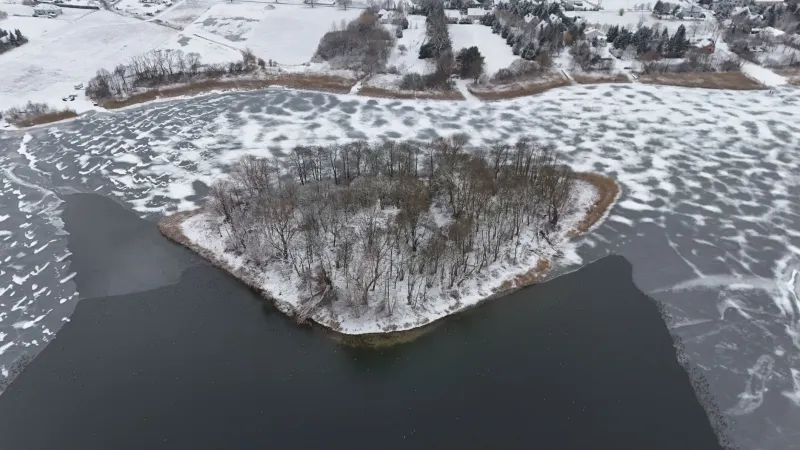
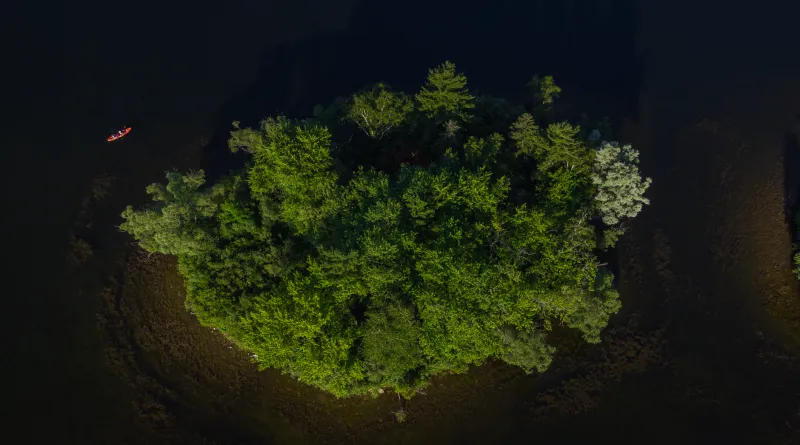
Here's the part that surprises people: in the U.S., that fantasy is rentable. Not in some vague "book a lakeside cabin" way — I mean whole islands, with water on every side, listed on the same vacation platforms you already use. I've shot on three of them now, and I want to walk you through what it's actually like, because the photos only tell half the story.
The Menu: From Bunkhouse Castaway to Full Buyout
The private freshwater island scene spans a wild range of budgets.
At the accessible end, you'll find rustic islands in Maine's lakes, the Adirondacks, and Minnesota's lake country — a cabin or two, an outhouse or a composting toilet, a rowboat or canoe included. These often run $150–$300 a night. Split between four friends, that's cheaper than a Holiday Inn, except the view is a 360-degree horizon of water and nobody can drive by your campsite.
Mid-tier gets you solar power, a real kitchen, a dock, and maybe a sauna. Think a few hundred dollars a night in Wisconsin, Michigan's UP, or upstate New York.
At the top, full-service buyouts — staffed islands in places like New York's Thousand Islands or Georgia's lake country — can run four figures a night. Gorgeous, yes. But honestly? The scrappy ones photograph better.
Shooting an Island That Answers to No One
Why are islands a photographer's cheat code? A few reasons.
You control the whole frame. On a private island, there are no photobombers because there is no one to photobomb. Golden hour, blue hour, 3 a.m. star trails — the location is yours on your schedule.
The water is a built-in reflector. Surrounded by lake, everything gets soft, bounced light from below. Portraits on islands have a glow that's genuinely hard to fake.
Weather becomes a subject, not a nuisance. Islands brew their own microclimates. Fog rolling across the water at dawn, storm light breaking over the far shore, ripples in patterns you'd never see from land — half my favorite frames happened when the weather "ruined" the plan.
Practical gear note: bring twice the batteries and half the lenses you think you need. You're paddling everything ashore. A weather-sealed body earns its keep out here, and a good tripod matters more than a fast prime, because the whole point is long exposures over water.
The Unsexy Logistics (Learn From My Mistakes)
Renting an island means becoming its temporary facilities manager. The big three:
Water. Ask directly: is it potable, hauled, filtered, or bring-your-own? I now default to hauling in five-gallon jugs regardless of the answer. Budget roughly a gallon per person per day for drinking and cooking, more in summer.
Power. Many islands run on solar with battery banks sized for lights and phone charging — not for your drone's six-battery charging marathon. Ask what the system can handle. Some hosts will let you run a small generator during set hours; some will absolutely not, and they're right not to.
Supply runs. If you forget the coffee, the coffee is a canoe trip away. Write a real list. Include a cooler strategy, because ice is a resource out here. And check the boat situation: is there a motorboat, a canoe, a ferry run by the host? Can you actually operate it? My first island trip, I learned I did not, in fact, remember how to handle a rowboat against a headwind. The cooler of food arrived an hour late and I arrived humbled.
Also: cell service ranges from mediocre to a rumor. Download offline maps, tell someone your float plan, and treat the host's arrival-and-departure instructions like scripture. Most island hosts have a narrow weather window for boat transfers.
What It Costs to Play Castaway
Ballpark, for a weekend: $300–$600 for the island itself if you go rustic and split it, $100–$150 in gear rentals (canoes, kayaks), $100 in food and fuel, and whatever your camera habit demands. That's a genuine private-island weekend for under $250 a person.
The splurge version — staffed, catered, sauna included — exists if you want it. But there's a case for the scrappy route beyond price: the work of hauling, filtering, and paddling is part of the story your photos will tell. There's a specific satisfaction in an image of dawn fog over water when you know you rowed into position for it.
The best frame I've ever gotten — a loon cutting a silver line across glassy water at first light — cost me a frozen morning, a cold breakfast, and the absolute certainty that I'd do it again. Turns out you can rent solitude in America. You just have to bring your own coffee.