When the Ferry Doors Close: Twelve Hours of Owning an Island Nobody Else Wanted
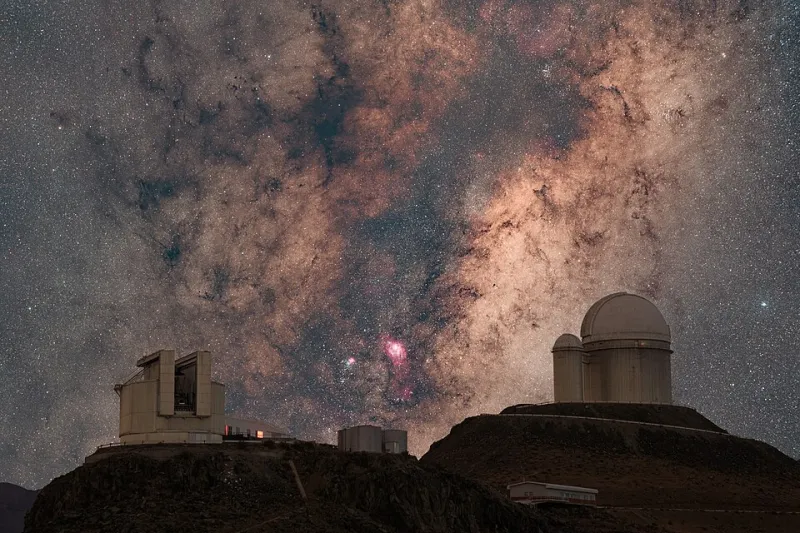
Photo: J. Rodrigues/ESO, CC BY 4.0, via Wikimedia Commons
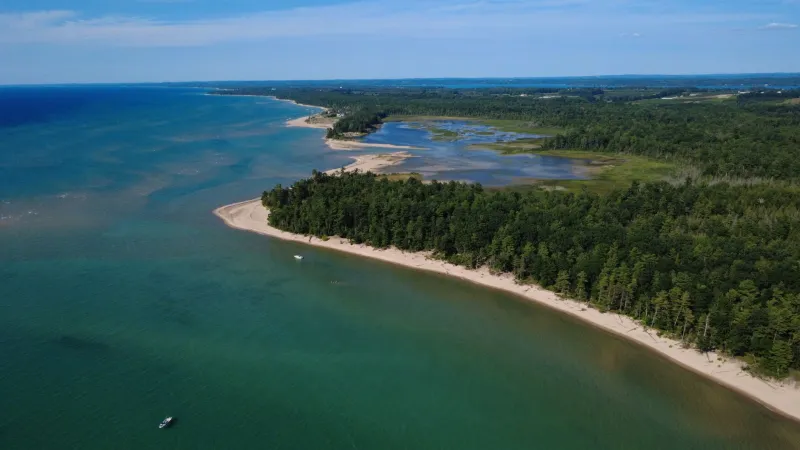
The 4:40 ferry pulls away from the dock with a sound like a long exhale, and just like that, the island belongs to about forty people instead of four hundred. I watched it happen from the porch of a rented cabin on a small island in Michigan's inland seas, a mug of gas-station coffee going cold in my hands. The day-trippers had come for the lighthouse, the fudge, the half-day kayak loop. Now they were gone, and the place was transforming in real time.
If you've only ever visited a freshwater island between nine and five, you haven't really met it. You've seen its public face. The night version is something else entirely.
The Hour the Island Exhales
The first thing you notice is sound — or rather, the layering of sounds the day crowd drowns out. Water against limestone. A loon doing its unhinged, wonderful call somewhere across the bay. Wind working through birch the way it apparently always has, and nobody around to hear it but you and a handful of year-rounders who chose this on purpose.
By six, the summer people who run the ice cream stand have flipped their sign. By seven, the light goes honey-colored and long, and the deer — who apparently keep a schedule stricter than the ferry — emerge from the cedar swamp to graze the empty picnic lawn like they own the place. Which, honestly, they might.
I walked the main road at dusk and passed exactly one human: a retired schoolteacher who summers here and told me, unprompted, that "the island puts on its real show after everybody leaves." She wasn't wrong.
Beavers, Owls, and Other Night-Shift Employees
Here's what nobody tells you: freshwater islands are working landscapes after dark, and the night shift is busy.
Around ten, sitting on the dock with a headlamp off (more on that later), I heard it before I saw it — a slap like a canoe paddle hitting the water. Beaver. Then another. They were rebuilding a dam at the mouth of the island's only creek, and they were loud, methodical, and completely indifferent to me. I watched a pair haul willow branches for the better part of an hour. It was better than anything on my phone.
Later, an owl — I want to say great horned, but I'm no expert — took up a position in the spruce behind my cabin and held forth until two in the morning. Barred owls do a version of this on many Great Lakes islands too. Either way, bring earplugs if you're a light sleeper, or don't, if you'd rather fall asleep to a raptor's monologue.
The Sky Is the Main Event
I've done dark-sky parks. I've driven two hours out of Phoenix for a decent Milky Way. Nothing prepared me for an island sky, where the water doubles the stars and the nearest light pollution is a fishing boat a mile out.
The Great Lakes region has some genuinely dark skies, and islands amplify that. On my second night, the Milky Way was so distinct I could trace its dust lane without trying. Satellites drifted by on the regular. A meteor — small, quick, generous — burned out over the mainland lights, which looked like distant embers from out here.
The rule: no white light. A red headlamp or a dim phone screen preserves your night vision, and honestly, after twenty minutes in true darkness, your eyes adjust to a level of seeing you forgot you had. It's the cheapest astronomy experience in America.
How to Actually Book This
The logistics are the hard part, so here's the honest version.
Go in the shoulder season. Late September through October is the sweet spot on most Great Lakes and Adirondack islands. Ferry schedules shrink — some run only two or three crossings a day — but lodging opens up and rates drop. Call, don't just book online; island innkeepers are famously responsive to an actual human on the phone, and they'll tell you which ferry time matters.
Check the last crossing. This is the whole game. Some islands run a final boat at 5 or 6 p.m. and nothing else. Miss it and you're either sleeping on a bench in the mainland terminal or paying for a water taxi that costs more than your room. Confirm the return schedule before you commit, and build in a ferry-sized buffer for weather.
Pack like the island is closed. Because partly, it is. Restaurants may be shut for the season, so bring food that doesn't need refrigeration, a real flashlight, layers, and cash for the honor-system farm stands that are common out here. Ask your host about potable water.
Book two nights minimum. One night and you get the darkness; two nights and you get the rhythm — the slow morning, the second dusk, the moment the place stops feeling like an event and starts feeling like a place.
Why the Off-Hours Matter
There's an argument that islands are most themselves when nobody's watching, and I've come to believe it. The daytime version performs for visitors. The nighttime version just exists — beavers engineering, owls holding court, water doing its endless work on the shore.
Eco-conscious travel gets framed as a list of restrictions: pack it out, stay on trails, don't disturb. All true. But there's a quieter version of the ethic, which is simply this: show up when the show isn't for you. Stay the night. Walk the dark road. Let the island be a place rather than a destination.
The 8:10 ferry leaves in the morning. Until then, this rock in the middle of the water is yours — and the beavers, if you're lucky, will let you watch them work.