The Land That Comes and Goes: Chasing America's Ephemeral Freshwater Islands
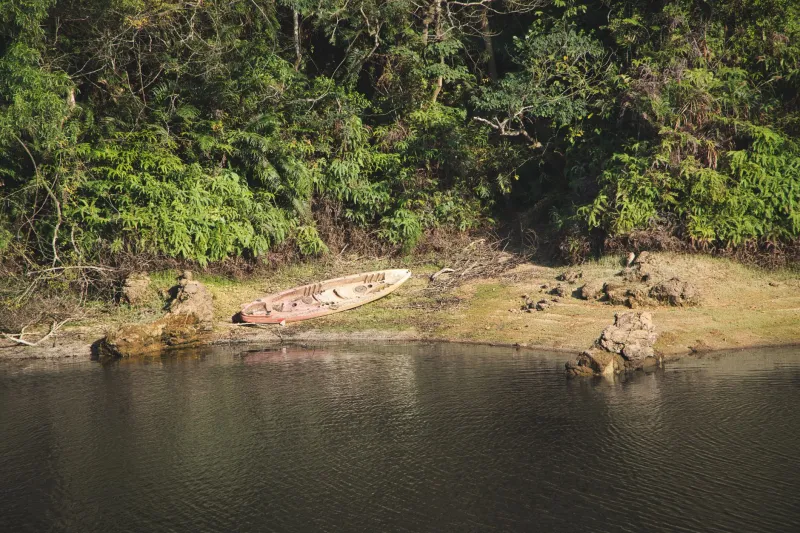
At Lake Powell, the island had a name on the map and a future measured in weeks. We saw it from a kayak in late spring: a hump of red rock with a few stubborn junipers, ringed by water the color of weak tea. By the time we paddled back, a channel had widened on one side. By the next month, according to satellite images, the hump had become a peninsula. That is the strange bargain of America's ephemeral freshwater islands. They are real enough to camp on, photograph, and argue about—and temporary enough to make every map a rough draft.
The Islands That Aren't on the Map
Ephemeral islands are not one kind of place. Some are reservoir islands that appear when water levels drop and vanish when they rise. Some are river islands built from sand and sediment, remade by every flood. Others are floodplain islands that exist only in high water, when backwater sloughs cut a piece of bottomland off from the mainland. In the American West, drawdowns at reservoirs such as Lake Powell and Lake Mead expose landforms that look permanent for a season. In the Midwest, the Mississippi and Missouri rivers constantly rearrange their sandbar islands. In the South, cypress swamps and slow rivers create floating mats and low hummocks that come and go with the water.
The point is not to bag a list of disappearing rocks. The point is to notice that inland waters are not scenery. They are processes. An island that appears in a dry year is not a sign that the drought is over or that the lake is giving back land. It is a data point about how much water we have decided to store, release, and consume. That makes these places beautiful, and a little political.
Where to Watch Land Appear and Disappear
You do not need a secret spot. You need good water data and a flexible plan. For reservoirs, start with the managing agency's elevation forecasts—Bureau of Reclamation, US Army Corps of Engineers, or the state parks system. A lake that is 30 feet below its high-water line will have islands; a lake that is rising fast may swallow the beach you planned to camp on. For rivers, check USGS gauges and local flood forecasts. A sandbar that is high and dry at 8 a.m. can be underwater by dinner.
Some accessible starting points for responsible observation: the drawdown zones of big western reservoirs, where exposed shorelines are often reachable from established marinas and overlooks; the sloughs and backwaters of the Upper Mississippi River National Wildlife and Fish Refuge, where islands shift with the flood pulse; and the floodplain country of the Missouri River, where state and federal agencies maintain public access points. None of these are theme parks. They are working waters, often with closed areas, tribal jurisdiction, and nesting seasons that matter more than your itinerary.
Time It Like a Local, Not a Collector
The best time to see ephemeral islands is usually not the busiest time to visit. Spring floods create the most dramatic river islands, but they also create dangerous currents and disturb nesting birds. Late summer and fall drawdowns expose reservoir shorelines, but that is when mudflats can be deceptively soft and when receding water leaves behind trash, tangled fishing line, and exposed cultural sites. Winter can be spectacular and empty—and hypothermic if you get it wrong.
A better rule: go when the water is stable, not when it is dramatic. Check the forecast for the whole week, not just the day. Ask a local outfitter what the shoreline was doing last week. If the water is rising, do not camp on a low sandbar. If the water is falling, do not drive onto exposed lakebed. And if you see birds circling a sandbar, give them the whole thing. Piping plovers, least terns, and other shoreline nesters do not need your Instagram.
The Ethics of Walking on Borrowed Land
Ephemeral islands are fragile precisely because they are new. Their soils have not had time to build. Their plants are pioneers—willows, cottonwoods, sedges—that can be scoured away by one wake or one boot print. Stay on durable surfaces: sand, gravel, rock, or established trails. Do not build cairns, fire rings, or art out of driftwood. Driftwood is habitat, not props. Pack out everything, including food scraps and fishing line. If a shoreline is posted closed, it is closed for a reason—often for nesting, restoration, or cultural protection.
And do not collect. Arrowheads, pottery, old bottles, and bones are not souvenirs. On many rivers and reservoirs, collecting artifacts is illegal and deeply disrespectful to the Indigenous nations for whom these waters are ancestral. If you find something that looks significant, photograph it, note the location, and report it to the managing agency. Then leave it alone.
Why These Shores Matter
The strange gift of a disappearing island is that it teaches you to pay attention. You cannot treat it as a checklist item. You have to read the water, the weather, and the rules. You have to accept that the place you came to see might not be there—and that your trip is not the most important thing happening on that shore.
That is a useful lesson for any traveler, but it is essential for anyone who loves freshwater islands. These places are not just pretty backdrops. They are the visible edge of how we manage water, land, and wildlife. When they vanish, they are not failing. They are telling us something. Our job is to listen, tread lightly, and come back when the water says so.