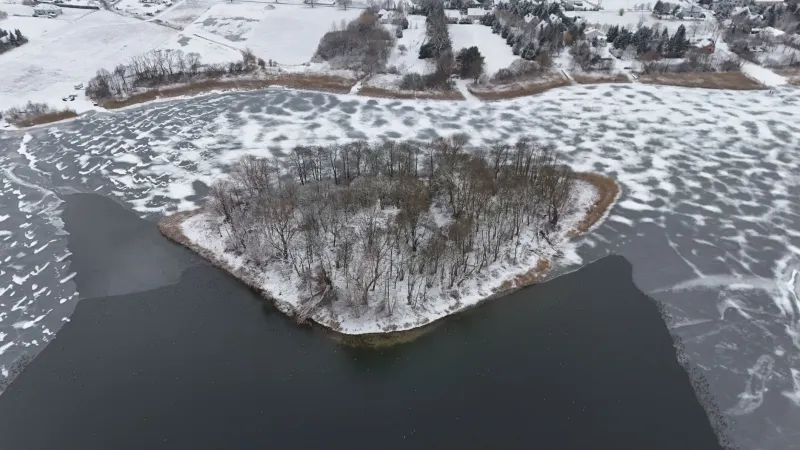
What the Water Leaves Behind: Reading the Clues on a Freshwater Island Beach
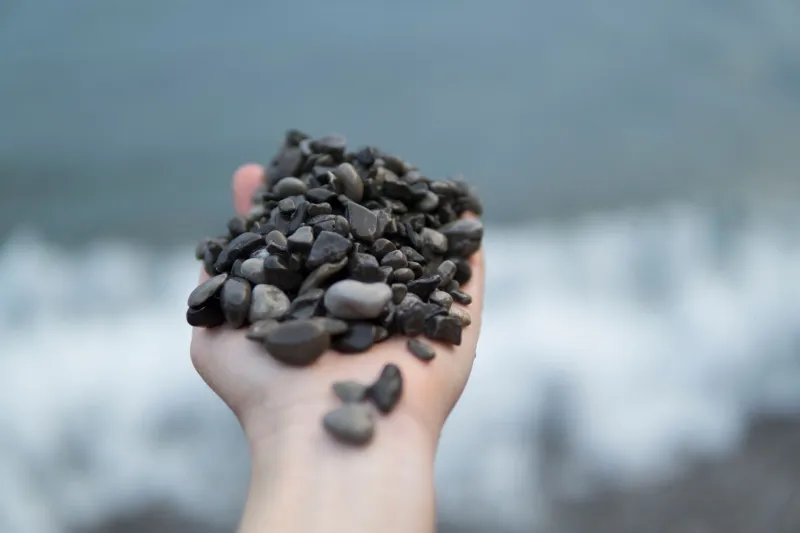
The first thing to understand about beachcombing a freshwater island is that you are not shopping. You are reading. The lake is a slow, indifferent archivist, and everything it leaves on the sand is a page from a file somebody else started.
I learned this on a cold stretch of cobble on Beaver Island, in northern Lake Michigan, where I spent forty minutes crouching over what I initially thought was a piece of blue glass and turned out to be a fragment of a Depression-era canning jar, worn to the texture of a bar of soap. It had traveled. It had been somebody's kitchen. Now it was a pebble with a past.
That's the whole practice: slow down, look down, ask what happened.
Start by Reading the Beach Itself
Before you hunt for objects, read the surface. Beachcombing rewards an understanding of how water moves.
After a strong onshore blow, the wrack line — that dark ribbon of weed, sticks, and debris a few feet above the current waterline — is where the fresh material lands. Walk the wrack line first. Walk it slowly.
Gravel beaches hold more than sand. Small stones, glass, and fossils get trapped in the spaces between cobbles and stay there. Sand beaches bury things and then release them, which is why the same cove can feel empty in July and generous in October.
Cove mouths and the lee side of points collect. So do the downwind ends of long beaches. If the wind has been out of one direction for two days, go to the far end.
Lake Glass: The Most Misunderstood Find
What most people call sea glass — on the Great Lakes it's lake glass, and nobody local flinches at the term — is broken bottle and window glass tumbled by sand and wave action until the edges round and the surface frosts. Real, fully frosted pieces take decades. Possibly more.
Tell the difference this way: a piece with sharp edges is recent litter, and recent litter should go in your pocket and then in a trash can. A piece with a matte, salt-and-pepper texture and softened edges has paid its dues.
Color tells you era. Clear and brown are ordinary. Green is common. Cobalt blue, aqua, and the rare pink or red are older and, in collector terms, more interesting — which is exactly why you should photograph them rather than pocket them. Take a picture, leave the object where the next person's kid can find it.
Fossils and Stones That Have a Story
Inland seas left a lot behind. The limestone around northern Lake Michigan and Lake Huron is Devonian, which is a fancy way of saying the fossils are roughly 350 million years old and the beaches are full of them.
Petoskey stones are fossil coral, recognizable by the hexagonal pattern that shows up best when the stone is wet. Charlevoix stones look similar but finer. Horn coral shows as ridged, tapering tubes. Crinoid stems look like tiny stacked coins. On Lake Erie's islands, you'll find brachiopods and trilobite bits in gray shale.
Lake Superior has its own catalog: agates with banded translucent interiors, and greenstones — chlorastrolite — which look like a mossy green starburst in a gray shell.
Here's the important part, and it's not a small point: check the rules before you pick anything up. Isle Royale National Park prohibits removing natural objects, full stop. Sleeping Bear Dunes National Lakeshore does too. Most state parks in Michigan, Wisconsin, and Ohio restrict or ban removal of natural materials. Personal-use collection of stones is allowed in some places and absolutely not in others, and the distinction is legal, not aesthetic.
The safe, decent default: natural objects stay, human debris goes.
The Human Stuff
Freshwater island beaches are museums of work. You'll find net floats, tangles of monofilament, weathered wooden lath from a fish house, the rubber fingers of a trawl glove, bottle caps from breweries that closed in 1961. Driftwood shaped by decades of ice and wind is the most photographed and least understood — those sculptural silver branches are habitat, not décor. Leave them.
Be careful with glass on the sole of your foot and with sharp metal anywhere. A canvas bag and a pair of gloves are not overkill.
Shooting It Like a Beachcomber
Photographing found objects is where this hobby turns into an art form, and the rules are simple.
Shoot in flat light. Overcast days are your friend. Direct sun blows out the frost on lake glass and flattens fossil detail. If the sun is out, work early, late, or in the shade of a driftwood log.
Wet the specimen. A splash of lake water makes the fossil pattern pop. It's the oldest trick on the beach.
Get low. A camera at ankle height makes a bottle stopper look like a monument. Bring a small mat or kneel on a bag — cobble is unforgiving.
Use shallow depth of field selectively. A wide aperture isolates one piece against the gravel, but for a group arrangement, stop down to f/8 or f/11 so the pattern of the beach stays legible.
Build a frame. Arrange finds in a rough grid on a flat rock, shoot straight down, and you have a taxonomy plate instead of a snapshot. Driftwood, glass, fossil, hook, float — one frame, one day's reading.
Check your white balance. Gray lake light and wet sand fool auto settings. A gray card or a custom white balance will keep the glass blue instead of cyan.
Where the Walking Is Good
Beaver Island, Michigan — miles of cobble and sand, fossil coral, and enough human debris to keep a curious kid busy for hours.
Madeline Island, Wisconsin — Apostle Islands country, with lake glass and beautifully abraded brick along the beaches near the ferry landing and beyond.
Kelleys Island and South Bass Island, Ohio — Lake Erie limestone, Devonian fossils, and the strange satisfaction of finding coral in Ohio.
Drummond Island, Michigan — rugged, quiet, and generously littered with interesting stone.
Isle Royale, Michigan — the best beachcombing in the country and the strictest rules in the country. Look. Don't take.
The Ethic, One More Time
Leave the wrack line alone — it feeds the beach. Don't build cairns, don't stack stones, don't rearrange a cove for a photo. Pack out monofilament and balloon strings because they kill birds and because it costs you nothing. Keep your finds in your camera roll and your trash in your bag.
A freshwater island beach will still be reading itself out long after we've all stopped walking it. The least we can do is not dog-ear the pages.