Storied Shores: The Untold Indigenous and Cultural Legacy of America's Freshwater Islands
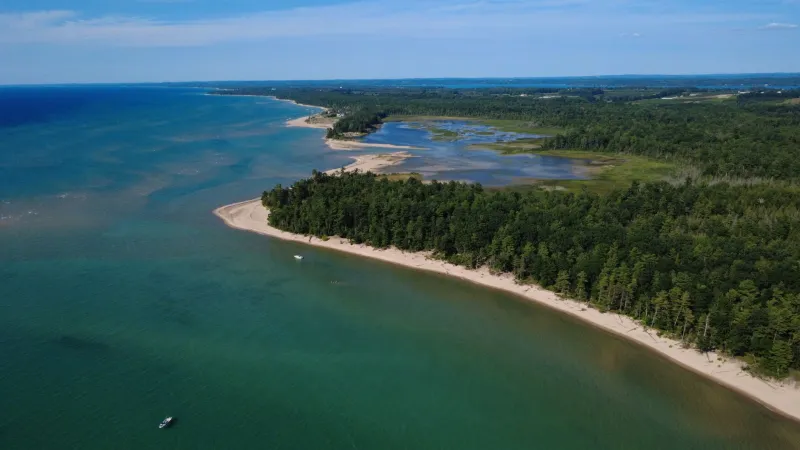
There's a moment that happens to almost every traveler who steps off a boat onto a freshwater island for the first time. The engine cuts. The mainland disappears behind a curtain of tree line and open water. And suddenly, the world gets very quiet and very old-feeling at the same time. That sensation isn't just the absence of traffic noise. It's something deeper — a kind of memory the land itself seems to be holding onto.
America's freshwater islands have been holding onto memories for a very long time. Thousands of years, actually. And the stories embedded in their shorelines, forests, and fishing grounds belong, first and foremost, to the Indigenous peoples who called them home, sacred ground, and gathering place long before European maps existed to name them.
Islands as Anchors of Indigenous Life
Across the Great Lakes region, the Upper Mississippi, and the river systems of the Midwest and Pacific Northwest, freshwater islands weren't remote outposts — they were centers of gravity. The Ojibwe (Anishinaabe) people, whose traditional territory spans the Great Lakes, recognized islands as spiritually significant spaces, places where the boundary between the physical and spirit worlds felt thinner and more permeable.
Madeline Island in Lake Superior — known in Ojibwe as Mooningwanekaaning-minis, or "the island of the yellow-shafted flicker" — is one of the most documented examples. It served as a major cultural and ceremonial hub for centuries, a place where clans gathered, where oral histories were passed and reinforced, and where the Midewiwin, the Grand Medicine Society, conducted ceremonies that tied generations together across time. The island wasn't just lived on. It was tended — spiritually, ecologically, communally.
Further south, the tribes of the Upper Mississippi — including the Ho-Chunk (Winnebago) and Dakota Sioux — used river islands as seasonal settlements, fishing stations, and trade meeting points. The geography itself was strategic: islands offered natural protection, abundant aquatic resources, and a kind of neutral ground that made them ideal for intertribal exchange.
"Water was never just a barrier to our ancestors," says one Ojibwe cultural educator and historian based in northern Wisconsin. "It was a highway. And the islands were the rest stops, the markets, the churches — all at once."
The Fur Trade Era and the Scramble for Island Territory
When European traders arrived in the Great Lakes region in the 1600s and 1700s, they immediately recognized what Indigenous peoples had long understood: freshwater islands were prime real estate. The fur trade economy turned many of these culturally significant spaces into commercial outposts almost overnight.
Mackinac Island — perched between Lake Huron and Lake Michigan — became one of the most contested and economically significant pieces of land in North America during the 18th century. The island had been a gathering place for multiple tribes for generations before French, British, and eventually American interests competed to control it. Today, Mackinac's famous ban on motor vehicles and its well-preserved Fort Mackinac draw roughly one million visitors a year. But the deeper, older story — of the Anishinaabe people who shaped the island's identity long before the fudge shops opened — tends to get fewer lines in the brochures.
That imbalance is something Indigenous historians and cultural advocates are actively working to correct.
Living Museums, Not Frozen History
One of the most important reframes happening in heritage travel right now is the shift away from treating Indigenous history as something that ended — a past-tense exhibit behind glass — toward understanding it as something that continues. Freshwater islands are powerful places to practice that reframe.
On Madeline Island today, the Madeline Island Museum works alongside the Bad River and Red Cliff Bands of the Lake Superior Chippewa to present a more complete picture of the island's layered history. Tribal members lead cultural programming, and the conversation increasingly centers on sovereignty, continuity, and the living traditions that connect modern Ojibwe communities to their island heritage.
Similarly, in the Apostle Islands National Lakeshore — an archipelago of 21 islands in Lake Superior — the National Park Service has made notable strides in collaborative management with the Bad River Band. Interpretive signage, ranger programming, and visitor materials now more explicitly acknowledge the islands' Indigenous context, though advocates say there's still significant ground to cover.
"The islands didn't become significant when the park service showed up," notes one tribal historic preservation officer. "They were already significant. We're just asking people to start the story at the right place."
How to Travel These Islands Responsibly
If you're planning a trip to any of America's historically significant freshwater islands, a little intentionality goes a long way. Here's how to show up as a thoughtful traveler:
Do your homework before you go. Look up the Indigenous nations whose traditional territory includes your destination. Resources like the Native Land Digital map (native-land.ca) are a solid starting point. Understanding whose land you're visiting isn't a buzzkill — it's just basic respect.
Seek out Indigenous-led programming. Many freshwater island destinations now offer cultural tours, interpretive experiences, or heritage events organized by tribal members or Indigenous-owned businesses. These aren't just more interesting than a generic historical plaque — they're also a more direct way to support the communities whose stories are being told.
Listen more than you photograph. This is good travel advice in general, but it applies especially in spaces with deep spiritual or ceremonial significance. Some areas may have protocols around photography or access. Ask. Follow the lead of local guides.
Buy local and buy Indigenous. From the Apostle Islands to the St. Lawrence River, Indigenous artists, food producers, and craftspeople operate near many freshwater island destinations. Spending your dollars there matters.
The Islands Remember
There's a concept in many Indigenous traditions sometimes translated loosely as "the land as teacher" — the idea that places carry knowledge, that the act of being present in a meaningful landscape is itself a form of learning. Spend a few hours on a Great Lakes island, watching the light change over the water, listening to the wind move through old-growth white pine, and that idea stops feeling abstract pretty fast.
America's freshwater islands aren't just pretty destinations. They're archives. They hold stories of resilience, adaptation, ceremony, and survival that stretch back thousands of years — stories that are still being told by the communities whose ancestors shaped these places.
The best thing any of us can do as travelers is slow down enough to actually hear them.